If the last few years of AI were defined by a gold rush, the atmosphere at the Park Hyatt Saadiyat this week suggests the industry has entered a new phase: Industrialization.
We spent the last 48 hours on the ground at the Machines Can Think summit, tracking the dialogue among the 1,500 policymakers and technologists gathered in the capital. The mood was distinct. The frenetic energy of early adoption has evaporated, replaced by the heavy, calculated focus of infrastructure building.
The most telling signal wasn’t what was being sold, but what was being asked. For the first time, government and high-stakes enterprise leaders weren't asking, "How do we access AI?" They were asking, "How do we govern it?"
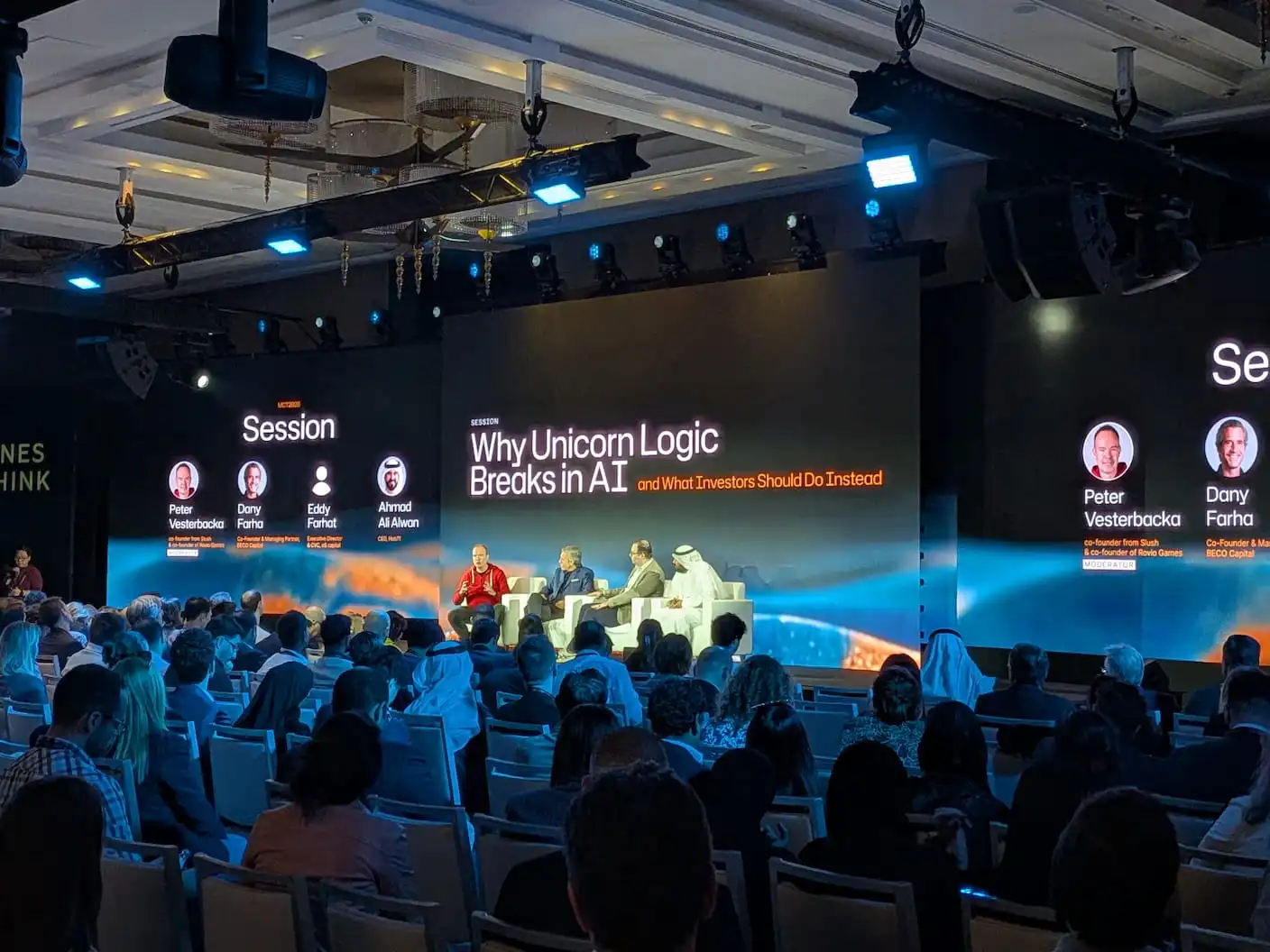
This shift was most palpable during the panel on "Why Unicorn Logic Breaks in AI." The consensus was striking: the Silicon Valley ethos of "move fast and break things" has become a liability. When you are building what we call the "Corporate Brain"—systems designed to integrate with defense logistics, national healthcare, or banking infrastructure—velocity cannot come at the expense of volatility. The market is no longer rewarding the company that deploys the fastest; it is rewarding the one that maintains the most control.
This sentiment was reinforced during Tahaluf’s technical workshop on Sovereign AI. It confirmed a reality we have long prepared for: the era of unrestricted global API usage is closing. For critical sectors in the UAE and GCC, "Data Residency" is no longer just a compliance checkbox—it is a matter of national security. The future isn't in open, borderless clouds, but in "Sovereign Clouds" where data never leaves the jurisdiction without a visa.
G42 and Mubadala expanded on this during their discussion on "AI Factories," laying out a vision where digital infrastructure is treated with the same gravity as physical industrial plants. The message was clear: We are moving from the "Chatbot Era" to the "Agent Economy." We aren't just generating text anymore; we are building autonomous employees that do work.
For AVELIN, this week was a powerful external validation of our thesis. The friction points identified on stage—shadow AI, cross-border leakage, and the need for rigorous agent governance—are exactly why we built our Sovereign Gateway. We didn't design AVELIN for the hype cycle; we designed it for this exact moment of industrial maturity.
As the summit closes, the takeaway is undeniable. The region is not merely consuming AI; it is regulating and architecting it to its own standards. The future belongs to those who can offer global intelligence with local control.